Winter weather can be tough on your home. A little preparation now could prevent expensive repairs, frozen pipes, and unexpected heating emergencies later.
Before temperatures drop below freezing, EDGE Energy recommends checking these five things around your home.
1. DISCONNECT OUTDOOR HOSES & WINTERIZE SPRINKLERS
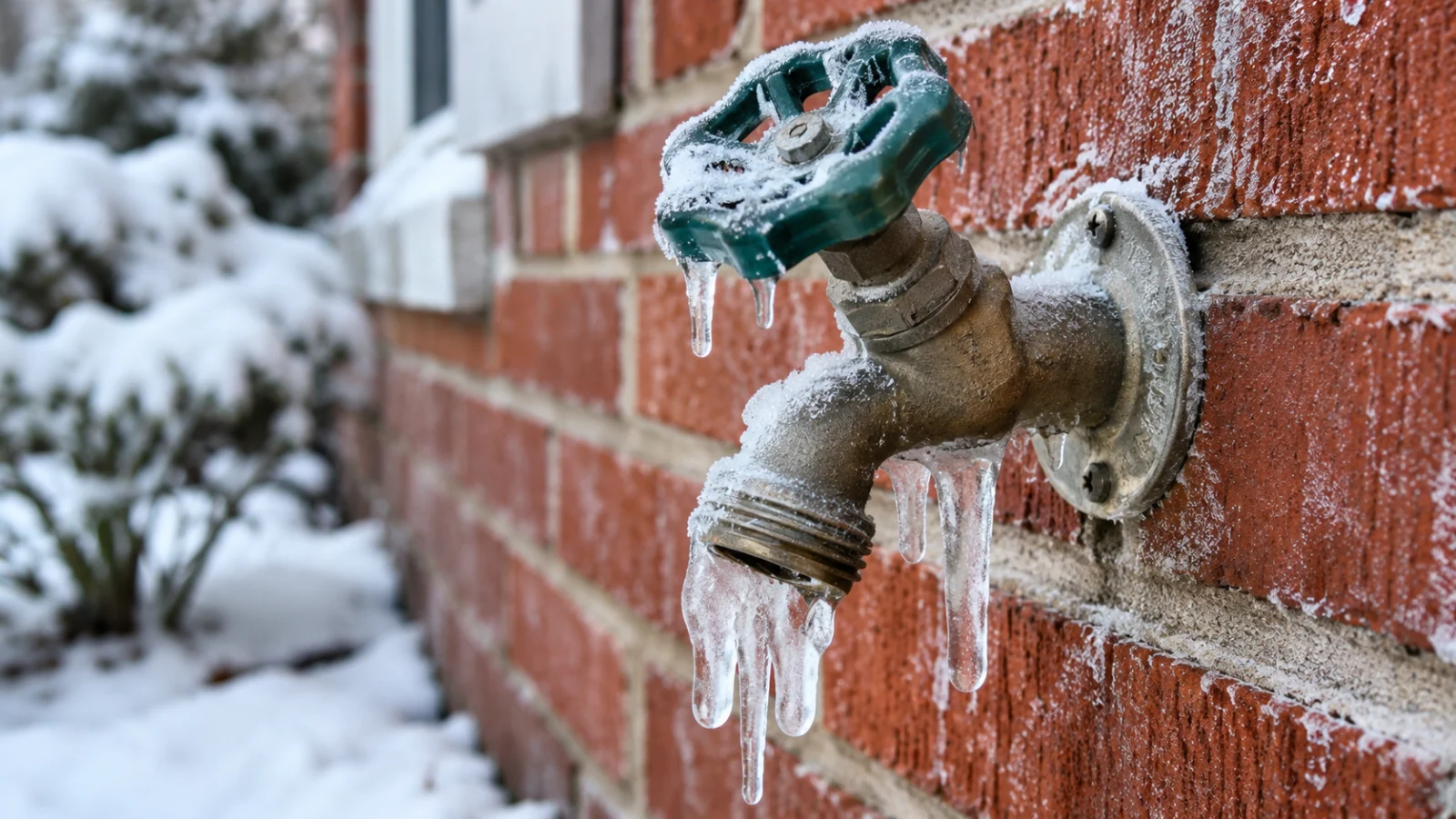
Leaving a garden hose connected during freezing weather can trap water inside your outdoor faucet and lead to burst plumbing.
Disconnect, drain, and store garden hoses. If your outdoor faucet has an interior shutoff valve, close it and drain the line according to your plumbing system's instructions.
Have an underground irrigation system? Schedule professional winterization with your sprinkler company. Water left in irrigation lines, valves, or backflow devices can freeze and damage expensive equipment.
2. PROTECT EXPOSED WATER PIPES
Pipes running through unheated garages, crawl spaces, attics, or along exterior walls are especially vulnerable to freezing.
Check for exposed plumbing and add appropriate pipe insulation where needed.
During extreme cold, keep garage doors closed and consider opening sink cabinet doors to allow warm indoor air to reach vulnerable plumbing.
3. FIND YOUR MAIN WATER SHUTOFF VALVE
If a pipe bursts, every minute matters.
Do you know where your home's main water shutoff valve is located?
Find it now, make sure household members know where it is, and verify that it can be operated safely.
Consider labeling it clearly so you aren't searching for it during an emergency.
4. TEST YOUR SMOKE & CARBON MONOXIDE ALARMS
Winter means more heating equipment running, and sometimes emergency use of generators or other backup devices.
Test your smoke and carbon monoxide alarms, replace batteries when necessary, and check their expiration dates.
Important: Never operate a portable fuel-powered generator inside a home, basement, garage, or enclosed space — even with doors open. Generators must be operated outdoors, at least 20 feet from the home, with exhaust directed away from openings.
5. CHECK YOUR HEATING SYSTEM BEFORE YOU NEED IT
Don't wait for the first freezing night to discover your furnace or heat pump isn't working properly.
Replace dirty HVAC filters, check thermostat operation, and make sure air registers and outdoor equipment are clear of obstructions.
Schedule professional service if your equipment is overdue for maintenance or showing signs of trouble.
If you'll be away during cold weather, keep your home's heating system operating. A commonly recommended minimum thermostat setting is 55°F, although some homes may need more heat to protect vulnerable plumbing.
A LITTLE PREPARATION GOES A LONG WAY
Winter emergencies often begin with small things we overlook: a forgotten garden hose, an exposed pipe, a neglected heating system, or a shutoff valve nobody knows how to find.
Spending a few minutes on these checks now can help protect your home and avoid expensive surprises later.
Coming soon from EDGE Energy: Our $1,300 Challenge — exploring how to prepare for a seven-day winter power outage without spending thousands on a whole-home backup system.
EDGE Energy — Helping DMV homeowners stay comfortable, safe, and energy-efficient since 2006.

Garrett Spangler writes about home energy, electrification, and the renewable industry for The EDGE Journal.
Questions about this article?
Fill out the form and our team will get back to you shortly.