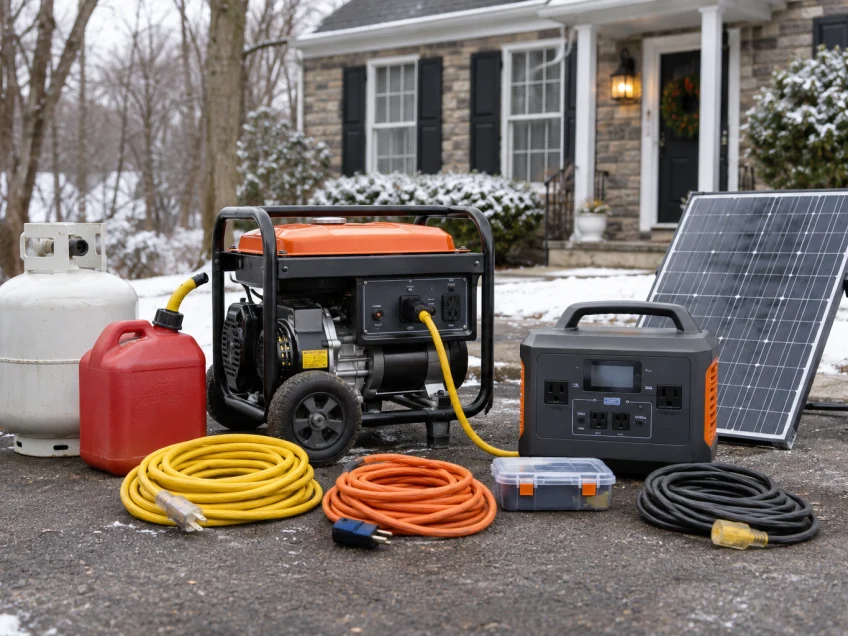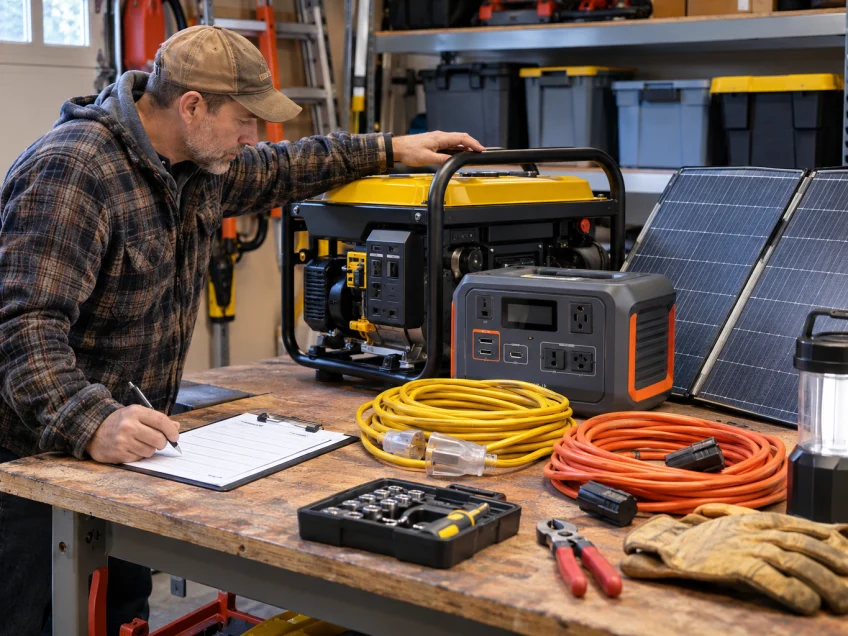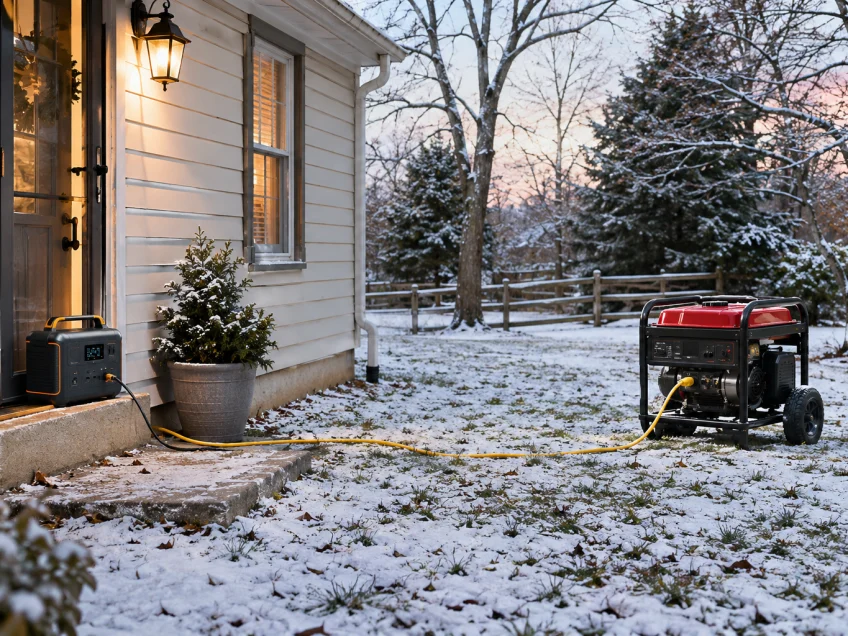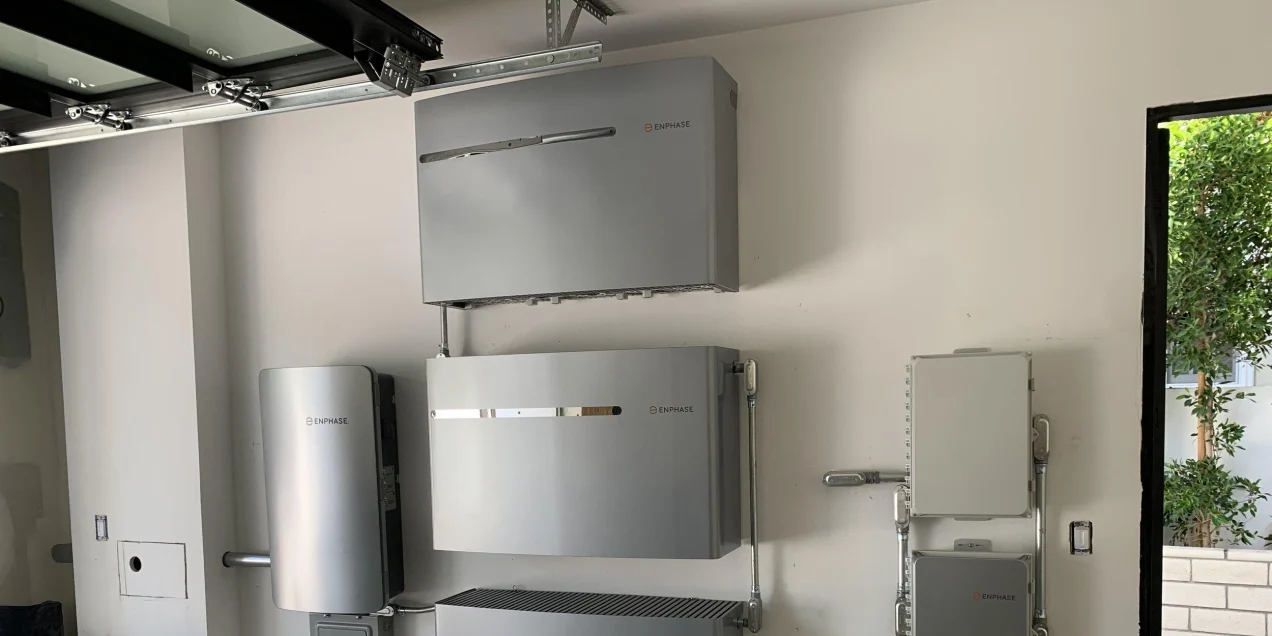
From professionally installed solar batteries to portable power stations and whole-home generators, homeowners have more options than ever when it comes to preparing for power outages. Understanding how these technologies work is the first step toward choosing the right solution for your home.
As battery technology continues to evolve and homeowners become increasingly interested in energy independence and grid reliability, backup power solutions are becoming an important consideration for many households.
At EDGE Energy, we professionally design and install residential solar battery systems, including whole-home backup configurations. We also recognize that every homeowner has different electrical needs, expectations and budgets.
Whether you are considering a comprehensive whole-home battery system or simply looking to keep essential appliances running during an extended outage, understanding your options can help you make a more informed investment.
1. Understanding Whole-Home Battery Backup
One of the most common misconceptions in the solar and battery industry is that a single home battery can efficiently power an entire house during a power outage.
While a single battery may be connected to your main electrical service panel and configured for whole-home backup, that does not necessarily mean it has the capacity or power output to support everything connected to that panel.
There are two important measurements to understand:
- Energy storage capacity (kWh): The amount of energy a battery can store, which helps determine how long it can power your equipment.
- Power output (kW): The amount of electrical demand a battery can support at any given moment.
Think of energy storage capacity as the size of your vehicle's fuel tank and power output as the capability of its engine. Both are important, but they serve different purposes.
If multiple large electrical loads operate simultaneously and exceed the battery system's power output, the system may shut down to protect itself. Depending on the equipment and configuration, restoring power may require a manual reset or intervention from someone at home.
Even if the system continues operating, higher electrical consumption will drain the battery's stored energy more quickly.
A single battery can be an excellent solution for backing up selected electrical loads. However, EDGE Energy does not recommend relying on a single battery for unrestricted, efficient whole-home backup in a typical household.
There is an important difference between connecting a battery for whole-home backup and designing a battery system capable of delivering the whole-home backup experience you expect.
2. How Many Batteries Does Your Home Need?
There is no universal answer to how many batteries are needed for whole-home backup. Every home is different, and a properly designed system should account for its individual electrical requirements.
Several factors influence battery system sizing:
- Main electrical service and panel configuration.
- Heating and cooling equipment.
- Gas versus electric appliances.
- Large electrical loads and equipment startup requirements.
- Simultaneous electrical demand.
- Household energy consumption.
- Desired backup duration.
- Available solar production for recharging.
For example, a home with a 150-amp electrical service, gas heating and a single air conditioning unit on a smaller breaker may be a good candidate for a two-battery configuration using batteries with 10 kWh or more of storage capacity each.
A home with a 200-amp electrical service may benefit from three batteries, although two could be sufficient depending on the electrical loads within the home.
Larger homes, homes with multiple electrical panels or households with substantial electrical demands may benefit from four or more batteries.
These are simply examples of how different homes may require different configurations. The electrical loads being backed up ultimately determine the appropriate number of batteries.
When properly designed, a whole-home battery system can provide seamless backup power, increased energy independence and peace of mind when the utility grid goes down.
3. Understanding the Investment in Home Battery Storage
Professionally installed home battery systems involve more than the purchase of the batteries themselves.
The first battery is typically the most expensive because its installation often includes much of the supporting infrastructure required to operate the system safely and integrate it with your home and solar PV system.
This can include:
- Backup controllers, gateways and supporting equipment.
- Solar PV system integration.
- Electrical equipment, wiring and installation labor.
- System design and engineering.
- Permits and applicable utility applications.
- System configuration, commissioning and testing.
Additional batteries can often utilize some of that same infrastructure while increasing the system's energy storage capacity and, depending on the equipment, its available power output.
A professionally installed two-battery system using larger residential batteries can cost $38,000 or more, with larger configurations requiring additional investment.
Pricing varies considerably depending on the manufacturer, equipment, electrical service, installation requirements and desired backup capabilities.
For homeowners who value automatic backup power, solar energy storage, reduced dependence on the utility grid and the convenience of a permanently installed system, this investment can provide significant benefits.
The important thing is understanding exactly what your system is designed to accomplish before making that investment.
4. Whole-Home Backup vs. Critical-Load Backup
When considering battery storage, one of the most useful questions to ask yourself is what you want to continue operating during a power outage.
Some homeowners want to maintain as much of their normal daily routine as possible. Others are primarily concerned with keeping food refrigerated, maintaining communications, operating essential heating equipment and ensuring their household remains safe and comfortable.
Both are reasonable objectives, but they may require very different backup power configurations.
| Potential Critical Loads | Loads You May Choose to Limit During an Outage |
|---|---|
| Refrigerator and freezer | Electric clothes dryer |
| Essential lighting | Electric vehicle charging |
| Internet and communications equipment | Electric oven |
| Phones and small electronics | Pool or hot tub equipment |
| Essential medical equipment | Dishwasher |
| Sump pump or well pump | Nonessential electronics |
| Essential heating equipment | Additional heating and cooling zones |
Even homeowners with comprehensive whole-home battery systems can benefit from managing their electricity consumption during an extended outage.
Reducing unnecessary electrical demand allows stored energy to last longer and can help the system recharge more effectively when solar production is limited.
Whole-home backup provides flexibility and convenience, while critical-load backup prioritizes available energy for the equipment you need most.
5. The Growing Capabilities of Smaller DIY Battery Systems
While permanently installed residential batteries continue to evolve, we have also seen significant advancements in smaller, portable battery systems.
These products, commonly referred to as portable power stations or DIY battery backup systems, have become increasingly capable, expandable and affordable in recent years.
Depending on the manufacturer and model, these systems can offer:
- Standard electrical outlets and USB charging ports.
- Expandable battery storage capacity.
- Portable solar panel charging capabilities.
- Real-time energy consumption monitoring.
- Backup power for refrigerators, freezers and electronics.
- Portability for use around the home, while traveling or during outdoor activities.
Smaller units can cost hundreds of dollars, while larger, expandable systems can cost several thousand dollars or more.
Most of these systems operate independently of your home's main electrical service panel and utility connection. Instead, appliances and equipment are plugged directly into the portable battery.
Although they typically do not integrate with your existing rooftop solar system, many models support compatible portable solar panels that can recharge the battery during an outage when adequate sunlight is available.
These systems can be an excellent option for homeowners who want to establish a basic level of backup power, gradually expand their capabilities or supplement an existing whole-home backup system.
How Long Could a Smaller Battery Last?
Consider a portable battery with 2 kWh of energy storage capacity powering several essential household items.
| Equipment | Estimated Daily Energy Consumption |
|---|---|
| Energy-efficient refrigerator | 1,000 Wh |
| Internet router (24 hours) | 240 Wh |
| Three LED lights (5 hours) | 150 Wh |
| Phone charging | 40 Wh |
| Total Estimated Daily Consumption | 1,430 Wh (1.43 kWh) |
After accounting for usable battery capacity and conversion losses, a 2 kWh portable battery could potentially power these items for approximately one day before needing to be recharged.
Adding compatible portable solar panels or additional battery storage could help extend that runtime.
Actual performance will vary depending on equipment specifications, appliance consumption, operating conditions and available sunlight. Appliances with higher startup power requirements may also require a more capable portable battery system.
While EDGE Energy does not currently sell these portable battery products, we recognize their growing capabilities and the value they can provide to homeowners.
If you are researching these products and are unsure what to look for, feel free to reach out to our team for guidance.
6. What About Whole-Home Generators?
Professionally installed standby generators are another established option for homeowners seeking comprehensive backup power.
A properly sized standby generator can automatically restore power to a home during a utility outage and continue supplying electricity as long as an adequate fuel supply is available and the equipment is operated and maintained appropriately.
For homeowners who experience extended outages or have substantial electrical demands, generators can offer an attractive combination of backup capabilities and upfront investment.
Depending on the equipment, fuel source, electrical configuration and installation requirements, a professionally installed standby generator may cost considerably less than a larger, multi-battery backup system.
However, batteries and generators offer different advantages.
Battery systems can store energy generated by your rooftop solar panels, operate quietly, provide backup power without onsite fuel combustion and potentially provide benefits even when the utility grid is operating normally.
Generators offer the ability to continue producing electricity during extended outages without relying on sunlight or stored electrical energy, provided an adequate fuel supply remains available.
Comparing Your Backup Power Options
| Feature | Professionally Installed Home Batteries | Portable DIY Batteries | Whole-Home Generators |
|---|---|---|---|
| Typical investment | Tens of thousands for larger systems | Hundreds to several thousand dollars or more | Often $10,000 to $20,000+, installed |
| Primary energy source | Stored electricity | Stored electricity | Natural gas or propane |
| Automatic backup | Available with proper configuration | Generally limited | Available with proper configuration |
| Rooftop solar integration | Available with compatible equipment | Typically not available | Typically operates independently |
| Portable solar charging | Not typically applicable | Available on compatible models | No |
| Operating noise | Minimal | Minimal | Noticeable |
| Maintenance requirements | Generally low | Generally low | Regular servicing required |
| Extended outage capability | Dependent on storage, consumption and recharging | Dependent on storage, consumption and recharging | Dependent on fuel availability and equipment operation |
| Expandable capacity | Available with compatible equipment | Available on many models | Generally limited |
| Everyday energy management | Available with compatible configurations | Limited | Primarily for backup power |
Each technology serves a purpose, and some homeowners may even benefit from combining different backup power solutions.
7. Solar Production During an Extended Power Outage
One of the greatest advantages of integrating a professionally installed battery system with rooftop solar is the ability to generate and store additional electricity during a utility outage.
With compatible equipment and proper system design, your solar panels can continue producing electricity, powering your home and recharging your batteries while the utility grid is down.
However, solar production naturally varies throughout the year.
Here in Maryland, Washington, DC and Northern Virginia, extended winter outages may coincide with shorter daylight hours, cloudy weather, snow-covered solar panels and increased heating demands.
Understanding how much energy your home consumes and how much electricity your solar system can generate under different conditions is an important part of designing a reliable backup power system.
Even with multiple batteries, being mindful of your electricity consumption during an extended outage can help maximize the benefits of your investment.
8. A Quick Reminder About Backup Power Safety
Regardless of which backup power solution you choose, safety should always be a priority.
When purchasing portable battery equipment, look for reputable manufacturers, appropriate independent safety certifications and products designed to support your intended electrical loads.
Always follow manufacturer charging and operating instructions.
Never attempt to backfeed your home's electrical system by connecting a portable battery or generator to a standard electrical outlet.
Generators must also be properly installed and operated to prevent carbon monoxide exposure and other hazards.
Any backup power equipment intended to connect directly to your home's electrical service should be properly designed and installed by a qualified professional.
9. Finding the Right Backup Power Solution With EDGE Energy
At EDGE Energy, we believe professionally installed solar battery systems are an excellent option for homeowners looking to increase their energy independence, improve their home's resilience and maintain power during utility outages.
We continue to design and install battery systems ranging from critical-load backup configurations to comprehensive whole-home backup solutions.
Our goal is to ensure every homeowner understands the capabilities of their system, how it will perform during an outage and what they can realistically expect from their investment.
Whether that means installing a single battery to support essential electrical loads or installing multiple batteries to provide comprehensive whole-home backup, proper system design is key.
We are also continuing to evaluate advancements in backup power technology and additional solutions that could benefit our customers.
Interested in a Future Whole-Home Generator Installation?
EDGE Energy is currently evaluating the possibility of offering professionally installed standby generators.
While we do not currently offer generator installations, homeowners interested in this service are welcome to contact us. We will reach out if and when this service becomes available.
Considering Solar Battery Backup for Your Home?
Whether you are interested in adding battery storage to your existing solar system, installing a new solar and battery system or exploring whole-home backup capabilities, our team would be happy to discuss your options.
DISCUSS MY BATTERY BACKUP OPTIONS
Every home is different. Understanding your electrical needs, available technologies and backup power objectives will help you choose a solution that provides confidence and peace of mind when the power goes out.

Garrett Spangler writes about home energy, electrification, and the renewable industry for The EDGE Journal.
Questions about this article?
Fill out the form and our team will get back to you shortly.