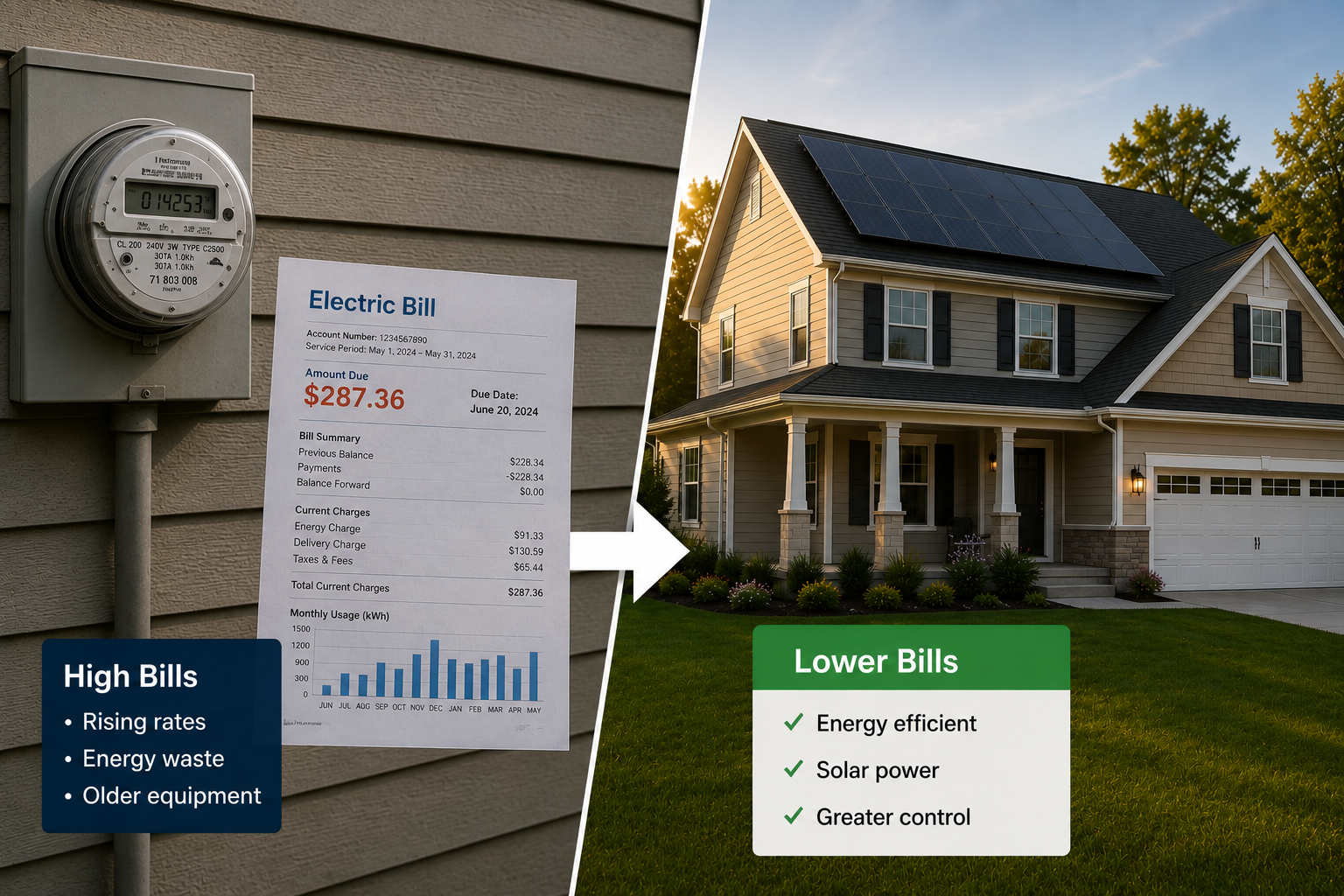
Have you looked at your electric bill recently and wondered, “How did it get this high?”
You’re not alone.
Across Maryland, Washington, DC, and Northern Virginia, homeowners are seeing higher electric bills than they did just a few years ago. While many people assume it’s simply because they’re running the air conditioner more often during the summer, the truth is that rising energy costs are driven by several factors, many of which have nothing to do with how often you adjust your thermostat.
The good news is this: you have more control than you might think.
While you can’t control the weather or utility rate increases, you can control how efficiently your home uses energy. By making smart improvements, you can reduce wasted electricity, improve your home’s comfort, and even produce your own electricity with solar.
At EDGE Energy, we believe homeowners deserve to understand why their electric bills are increasing before deciding which solutions make the most sense for their home.
Why Are Electric Bills Increasing?
There isn’t one single reason. Instead, several factors are contributing to higher monthly electric bills throughout the DMV.
Rising Utility Costs
Electricity prices have steadily increased in recent years as utilities continue investing in infrastructure improvements, grid modernization, reliability upgrades, and meeting growing energy demand.
Even if your family uses the same amount of electricity as last year, paying more per kilowatt-hour can still result in a noticeably higher monthly bill.
While these investments help improve the electric grid, they also contribute to rising costs that homeowners see each month.
Hotter Summers Mean More Cooling
Summer is one of the most energy-intensive times of the year.
As temperatures climb into the 90s and humidity increases, your air conditioner must work harder and run longer to maintain a comfortable indoor temperature.
Even just a few extra degrees outside can translate into significantly more electricity usage over the course of a month.
Our Homes Use More Electricity Than Ever Before
Today’s homes rely on electricity more than ever.
Many households now have:
- Home offices
- Multiple computers
- Large televisions
- Gaming systems
- Smart home devices
- Additional refrigerators or freezers
- Electric vehicle chargers
- Pool equipment
- More electronics charging every day
Even though many devices are more energy efficient than older models, there are simply more of them.
Growing Energy Demand Beyond Your Home
The demand for electricity isn’t just increasing inside our homes.
Across the country, electricity demand continues to grow as more transportation, appliances, and equipment become electric. At the same time, new technologies, manufacturing facilities, and large computing operations require significant amounts of electricity to operate.
As our electric grid supports more users and greater demand, utilities continue investing in upgrades that help ensure reliable service for years to come.
Understanding Your Electric Bill
One of the biggest misconceptions homeowners have is believing their electric bill is simply based on how often they use the air conditioner.
In reality, your bill is made up of several different components.
While every utility formats bills differently, you’ll typically see charges related to:
Energy Usage
This reflects the amount of electricity your home actually consumed during the billing period.
The more electricity you use, the larger this portion becomes.
Delivery Charges
Electricity has to travel from power plants to your home through thousands of miles of transmission and distribution infrastructure.
Delivery charges help maintain that infrastructure, repair equipment, improve reliability, and respond to outages.
Even homeowners with solar often continue paying certain utility-related charges.
Seasonal Usage
Your electricity usage naturally changes throughout the year.
Summer cooling and winter heating often produce the highest bills because HVAC equipment works much harder during extreme temperatures.
Why Comparing Bills Matters
Instead of only comparing your latest bill to last month, compare it to the same month last year.
Doing this provides a more accurate picture because weather conditions and seasonal energy use are generally similar.
If your usage is nearly the same but your bill increased significantly, rising electricity rates may be playing a larger role.
If your usage also increased, your home’s energy performance may deserve a closer look.
Hidden Energy Waste You Can’t See
Many homes lose energy every single day without homeowners realizing it.
Some of the most common sources include:
- Air leaks around doors and windows
- Poor attic insulation
- Gaps around plumbing and electrical penetrations
- Leaky ductwork
- Poorly sealed attic access doors
- Older HVAC equipment
- Aging water heaters
All of these force your equipment to work harder and consume more electricity.
Common Misconceptions About High Electric Bills
“It’s Just My Air Conditioner.”
While your HVAC system is one of your home’s largest energy users, it’s rarely the only reason your electric bill is high.
Your home’s insulation, air leakage, appliances, lighting, electronics, water heating, and everyday habits all contribute.
“Turning My Thermostat to 65° Will Cool My House Faster.”
It won’t.
Your air conditioner cools at the same rate regardless of the temperature you select.
Setting it dramatically lower simply causes it to run longer than necessary.
“My Home Is Old. High Bills Are Just Part of Living Here.”
Older homes often have tremendous opportunities for improvement.
Many homeowners are surprised by how much more comfortable and efficient their homes become after addressing insulation, air sealing, HVAC equipment, and other energy upgrades.
“Solar Is the Only Answer.”
Solar is an outstanding long-term investment, but it’s only part of the solution.
Reducing wasted energy first allows your future solar system to offset an even greater percentage of your remaining electricity use.
Simple Ways to Lower Your Electric Bill Today
Before making larger investments, there are several simple things homeowners can do.
Replace HVAC Air Filters
Dirty filters restrict airflow, forcing your system to work harder.
Use Ceiling Fans Properly
Fans cool people, not rooms.
Turn them off when rooms aren’t occupied.
Close Blinds During Peak Sunlight
Blocking direct sunlight reduces heat entering your home.
Eliminate Phantom Power
Many electronics continue using electricity when turned off.
Smart power strips can help reduce unnecessary energy use.
Seal Small Air Leaks
Weatherstripping and caulking around obvious gaps can improve comfort while reducing energy waste.
Long-Term Solutions That Deliver Bigger Results
Small changes help.
Strategic home improvements often make the biggest difference.
Start with a Home Energy Audit
A Home Energy Audit helps identify where your home is losing energy and prioritizes improvements that will have the greatest impact.
Rather than guessing, you’ll receive recommendations tailored specifically to your home.
Improve Insulation & Air Sealing
Many homeowners think insulation alone solves the problem.
In reality, insulation and air sealing work together.
Air sealing keeps conditioned air inside your home while preventing unwanted outdoor air from entering.
Combined, they can significantly improve comfort and reduce energy waste year-round.
Upgrade Aging Equipment
As equipment ages, efficiency declines.
Replacing older systems with today’s high-efficiency options can reduce energy consumption while improving comfort and reliability.
Prepare Your Home for the Future
More homeowners are installing:
- EV chargers
- Heat pump water heaters
- Induction cooking appliances
- Heat pumps
- Solar
- Battery storage
Making sure your electrical system is ready today can simplify future upgrades.
Solar Gives You More Control
One of the biggest misunderstandings about solar is how it actually saves money.
Solar doesn’t reduce how much electricity your home uses.
Energy efficiency reduces the amount of electricity your home needs.
Solar generates the electricity your home still requires.
Together, they’re incredibly powerful.
Imagine reducing your home’s energy waste through air sealing, insulation, or efficient equipment.
Now imagine producing much of the electricity your home still uses with a professionally designed solar system.
Instead of simply paying higher utility bills year after year, you’re taking greater control over your long-term energy costs.
That’s why many homeowners view solar as part of a complete energy strategy rather than a standalone purchase.
Every Home Is Different
No two homes use energy exactly the same way.
Some homeowners benefit most from insulation improvements.
Others may be excellent candidates for solar.
Some need HVAC upgrades.
Others may benefit from electrical improvements before making additional investments.
The best solution is the one designed specifically for your home.
Let EDGE Energy Help You Take Control
If your electric bills seem to increase every summer, you don’t have to keep wondering why.
EDGE Energy can help you understand how your home uses energy and identify the improvements that make the most sense for your goals.
Whether your home would benefit from a:
- Home Energy Audit
- Insulation & Air Sealing
- HVAC improvements
- Solar
- Electrical panel upgrades
- Heat pump water heater
- EV charger
- Other electrification improvements
our team can help you create a personalized plan.
Higher electric bills don’t have to become your new normal.
By improving your home’s energy efficiency and exploring long-term solutions like solar, you can improve comfort, reduce wasted energy, and take greater control over your monthly energy costs.
If you’re ready to better understand your home’s energy use, contact EDGE Energy today. We’ll help determine whether a Home Energy Audit, Solar, HVAC improvements, or other energy upgrades are the right next step for your home.